

Elton Hall & Gardens
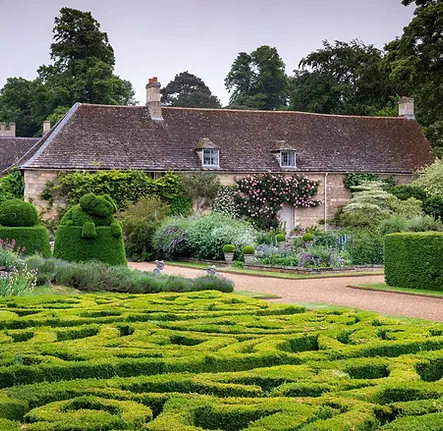
For centuries Elton Hall has sat in extensive parkland leading to the River Nene. The gardens have expanded from moated grounds to formal gardens and the current layout reflects a combination of modern planting and Edwardian design. This has produced a stunning flower garden, an orangery, lily pond and immaculate hedging and topiary.
The house has been the home of the Proby family since 1660, although previous generations held land at Elton from the time of Elizabeth I. Elton Hall is enchanting and there is something romantic and magical about the building with its gothic south elevation set at a right angle to the classical, French inspired, entrance wing. Successive generations have embellished both the house and collection, which contains many Old Masters and fine examples of English portraiture by Reynolds, Gainsborough and Romney. A visit, which also includes the recently Award-winning restored gardens, provides the visitor with a fascinating insight into British history and taste.
Alexandra Proby and her family continue to maintain and preserve the house and welcome visitors to the Hall. There is something for everyone to see, from the private chapel used by the family for christenings and special events, books from the library of over 10,000 volumes and portraits including ones of Oliver Cromwell, Charles 1 and Charles II, representing the tumultuous times of the 17th century.

The House
The Proby family originally came from Chester. Sir Peter Proby was the first family member to acquire land at Elton when he bought a lease of the Manor of Elton for the sum of £850 in 1595. He acquired further leases from Queen Elizabeth in 1602, was Lord Mayor of London in 1622 and knighted in 1623, the year before he died. His grandson, Sir Thomas Proby, married a local heiress, Frances Cotton, and was created a baronet in 1662. They acquired the site of the Hall and built a fine Restoration house between 1665-1668, which incorporated the medieval chapel and gatehouse of the original Manor House.
In the 18th century John Proby married an Irish heiress, Elizabeth Allen and was created Lord Carysfort. His son became the Earl of Carysfort. The latter was an inveterate builder and Gothicised the house, giving it dramatic appeal. Some of his work can still be seen on the South side. Sympathetic additions and alterations to the house took place between 1855 and 1860, masterminded by Henry Ashton, a pupil of Wyatville, who also worked for the Dutch Royal Family.
Successive generations of the family served either as MP’s or in the Navy. The 1st Earl of Carysfort was an Envoy to the Court of Berlin and served as a Minister under Lord Grenville in 1806. His son, the 3rd Earl, began his career as a Midshipman under Nelson at the Battle of the Nile and later became an Admiral. The collection is an amalgam of two houses, as the contents of Glenart Castle, the Irish seat of the Carysforts, were brought over in the early 1920s.
The house contains superb treasures, including fine French furniture, one of the best libraries in private hands and a magnificent collection of paintings. Art enthusiasts can gaze upon works by Renaissance artists dating from the early 15th century, to marvellous 19th century works by J.F. Lewis, Landseer and Millais. The collection also has works by renowned British artists, Gainsborough, Constable and Reynolds.
gallery

elton hall & Gardens

elton hall & Gardens

Elton Hall & Gardens

Elton Hall & Gardens

Elton Hall & Gardens
Elton Hall & Gardens

Elton Hall & Gardens

Elton Hall & Gardens
The Garden
Historic Houses Garden of the Year Judges’ Choice Award winner 2021
The gardens you see today are the work of Meredyth Proby, who spent the last forty years re-designing and re-planting them. They provide a stunning backdrop to the house and contain many unusual plants and shrubs. Prints on display in the house show how Sir Thomas Proby first laid out his garden in the 1670’s and how it developed during the 18th and 19th century. The present gardens are based on a design made in 1911 by A.H. Hallam Murray, father-in-law to Sir Richard Proby (d.1979). They were originally designed for fourteen gardeners and included the large Walled Garden which is now a Plant Centre. When Sir William & Lady Proby lived at the Hall from 1980 – 2021 the gardens had to be greatly reduced and restored. Although the garden is smaller, the new extensive hedging and topiary have created different areas and structure throughout the year which provide a perfect backdrop for the more intensive planting.